Takes No. 004
Google is testing a top spot for official pages in AI answers. Here’s how to get your site ready
On October 15, Google said it will test a section for official pages at the top of AI answers. What it means for your site, and five steps to take now.
What happened
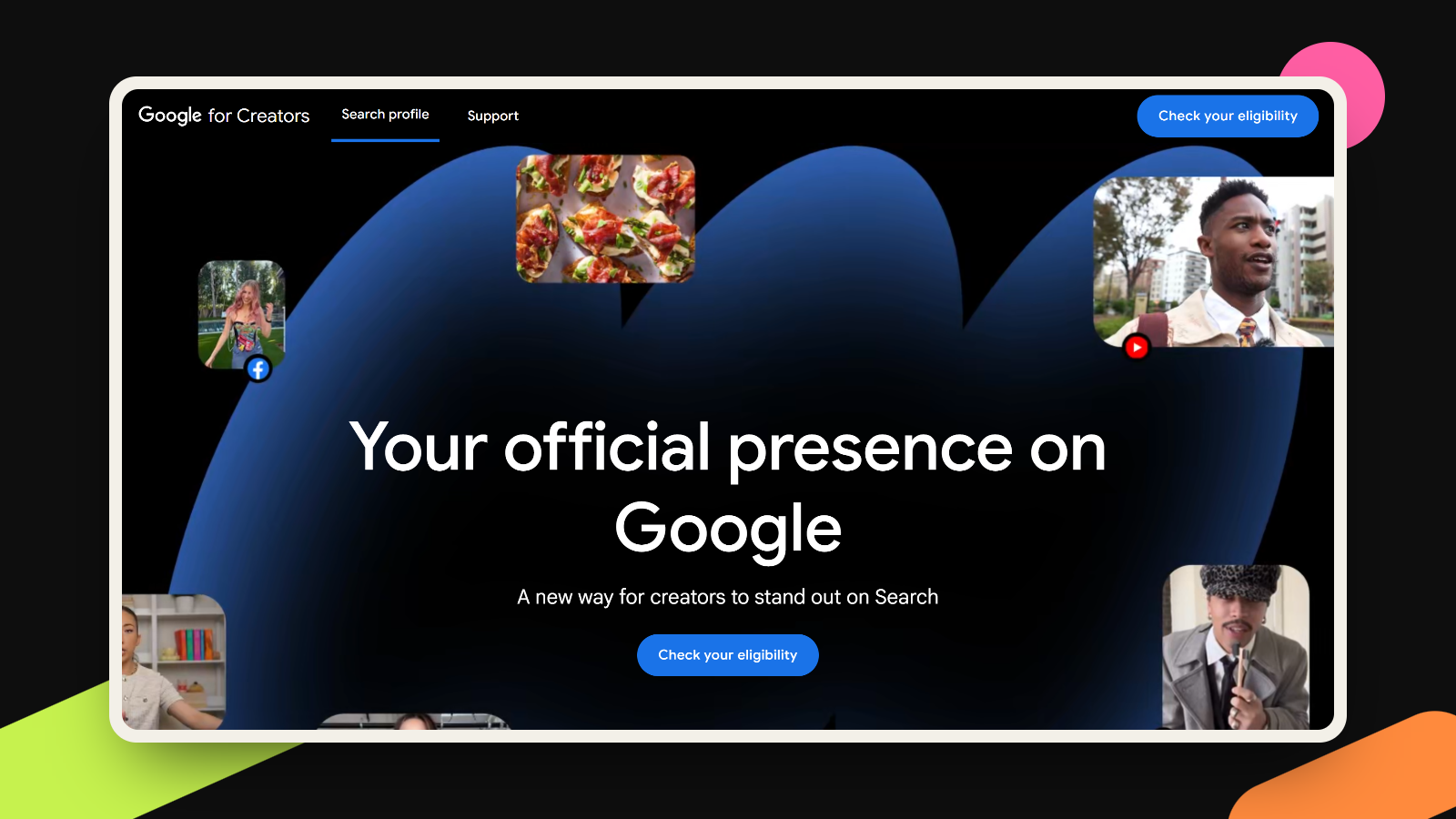
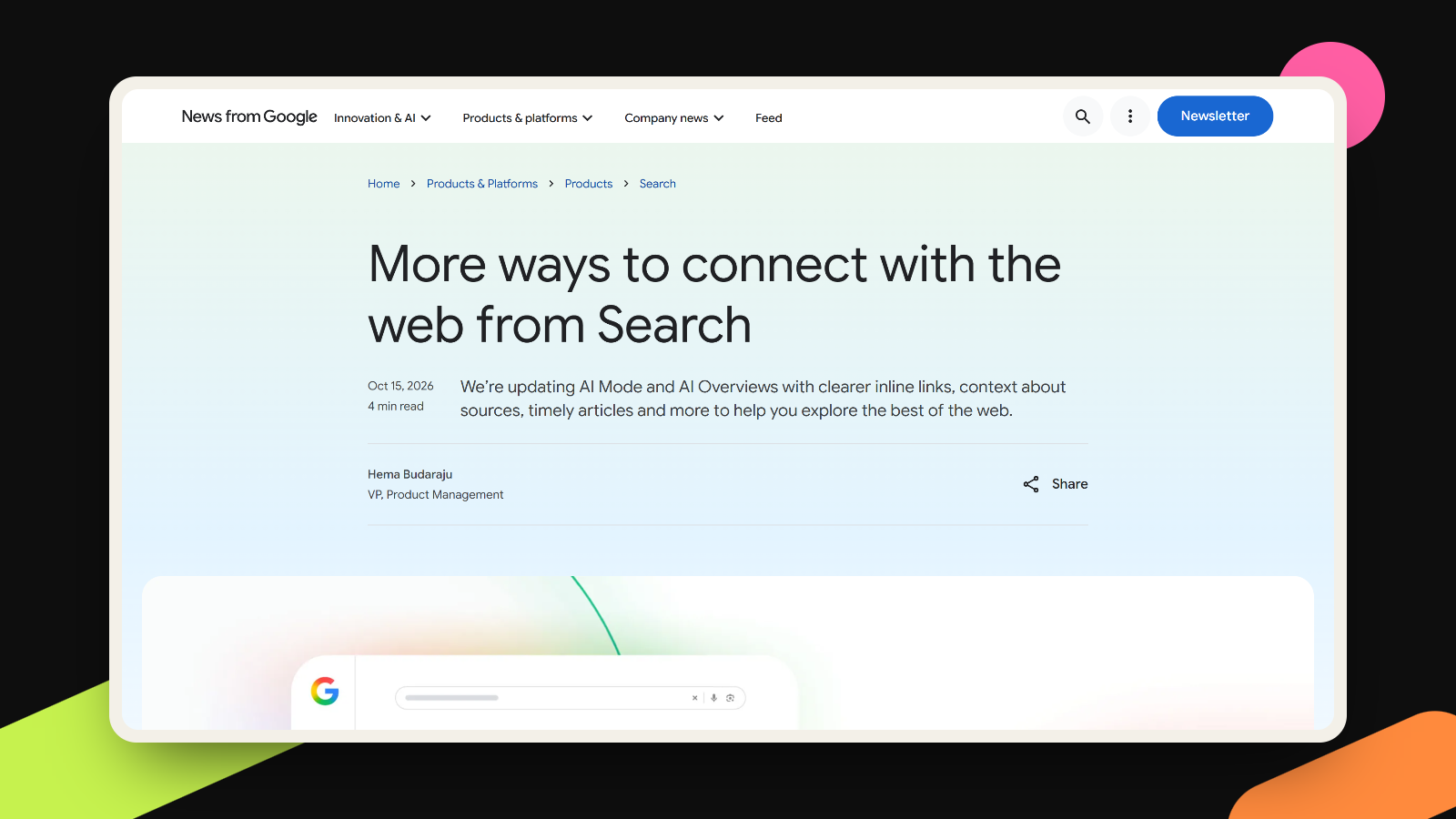
On October 15, Google announced five changes to how AI Overviews and AI Mode show links. In a post on Google’s blog, Hema Budaraju, a vice president of product management, wrote that inline links (the ones inside the AI’s answer) will now appear higher up and more often. Links at the end of some answers get image thumbnails. News carousels are expanding to more countries and languages, and Google is testing clickable creator names on video results that lead to their Search profiles.
The change I keep rereading is the second one. Google says that “sometimes, there are only one or two official places on the web” to finish a task or get an exact answer. It will test a display that puts those links “in a dedicated section at the top of a response,” with a note on why each one is useful. It’s a test, and the post gives no dates or countries.
What it means for you
For two years, the worry about AI answers has been that they keep people on Google. This test points the other way for one kind of search: the moment someone wants to do something with a specific company. Think of searches like “book a call with [your studio],” “[your product] pricing” or “cancel [your app] subscription.” For those, Google wants to send people to the source, and the source is your website.
There’s a catch, and it’s an honest one. Google can only point to an official page that exists. If your pricing lives in a PDF you email on request, or your booking link only appears in an Instagram bio, there’s nothing on your own site for Google to show. A directory listing, an old press article or a reseller’s page will fill that spot instead, and you won’t control what it says.
I also went looking for a special trick, because someone is usually selling one. Google’s own guide to AI features and your website is refreshingly blunt: there are “no additional requirements” to appear in AI Overviews or AI Mode, and you don’t need “AI text files” or any “special schema.org structured data.” The only bar is that a page is indexed and allowed to show a snippet.
What’s left is plain housekeeping: making sure each thing a customer wants to do with you has one clear page that does it, and that Google can tell the page belongs to you. On that second point, Google’s guide to site names asks owners to use the same name throughout the home page, and its Organization markup guide says that markup helps it “disambiguate your organization in search results.” That matters if your company shares a name with a bakery in Ohio. It’s a small detail, and it’s the one I’d fix first if your brand is spelled three ways across your site.
What to do this week
- List the five things people most often want to do with your business: book, buy, check prices, get support, cancel. Be honest about what your inbox actually asks.
- For each one, find the page on your site that answers it. If the answer is “it’s in an email” or “it’s on Calendly,” give it a real page on your own domain with a plain title, like “Pricing” or “Book a call.”
- Write the first two lines of each page so they answer the question directly. Google says each link in the new section comes with context about why it’s useful, and a page that gets to the point gives it something to work with.
- Pick one spelling of your company name and use it in your page titles, header, footer and social profiles. Ask your developer to add Organization markup with your logo and links to your social accounts, if it isn’t there yet.
- Open Google Search Console and use the URL Inspection tool on those key pages to confirm they’re indexed. A page Google hasn’t indexed can’t be the official answer.
None of this is new advice, which is part of why I like it. Clear pages that do one job well have long served visitors, and now they’re also what Google says it wants to put at the top. If your site needs that kind of clean-up, it’s the core of our website work.
More takes
All takes