Takes No. 006
ChatGPT ads can target by email list and by chat topic. Here’s what that means for a small brand
OpenAI's ad system reads your customer list and the chat itself. Why the list rules favor big brands, and why your landing page matters more.
What happened
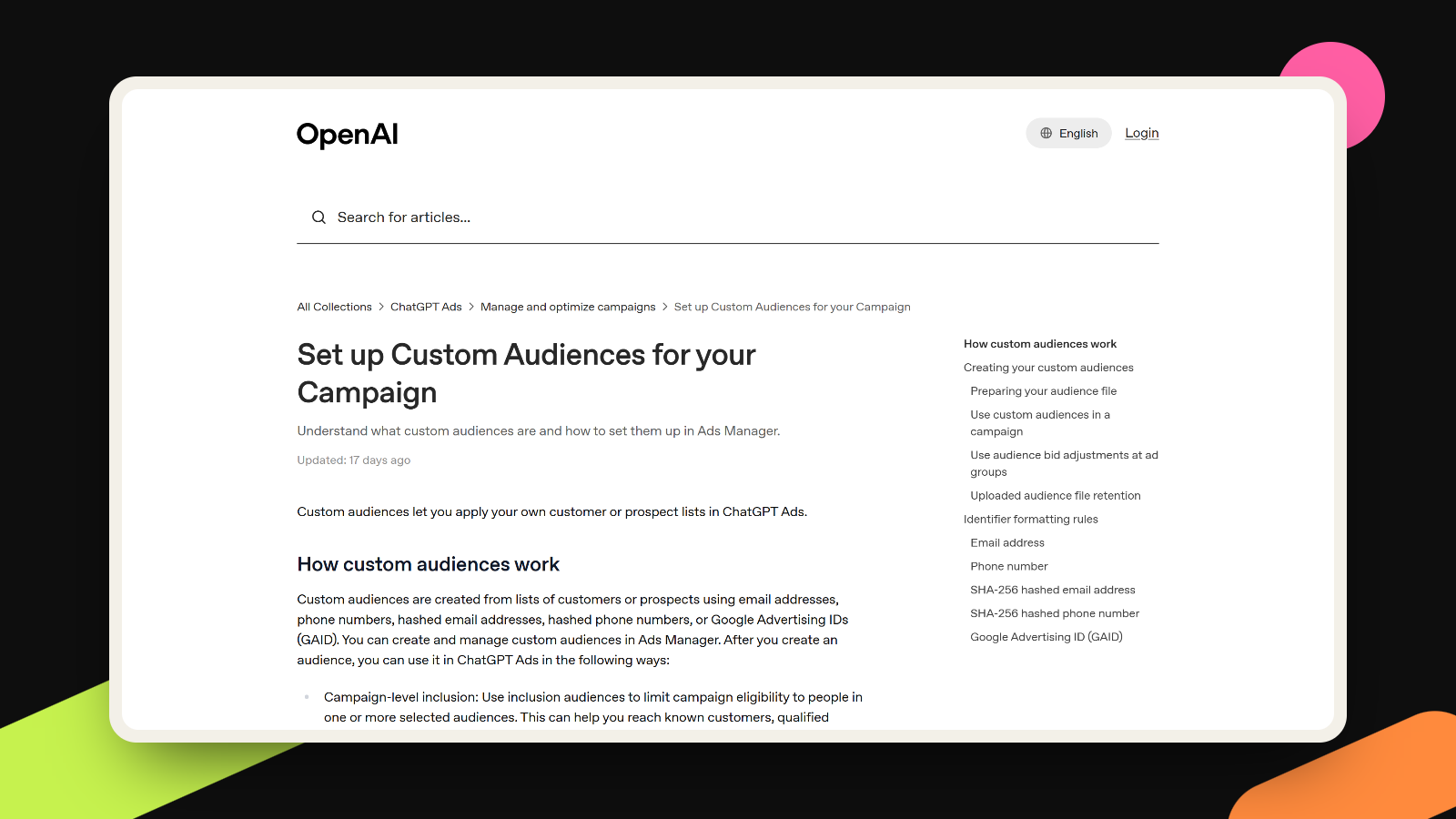
On October 15, 404 Media published a look at how ads in ChatGPT are targeted, based on the outlet’s own test campaigns. The part that spread fastest: advertisers can upload lists of email addresses or phone numbers and aim ads at the ChatGPT accounts that match. OpenAI’s help page on custom audiences describes how it works. An advertiser uploads a customer or prospect list, OpenAI matches it, and the advertiser doesn’t get to see who matched. Using a list to choose who sees an ad needs at least 25,000 matched users, and OpenAI recommends 100,000.
The other half is the conversation itself. OpenAI’s FAQ on ads in ChatGPT says the ad system weighs “the context and intent of your current conversation,” along with the ad’s landing page, title and copy. Turning off ad personalization doesn’t switch that off: you “will still see ads based on the context of your current chat thread.” Ads appear only on the Free and Go plans, below a response, and OpenAI says they don’t influence what ChatGPT answers.
What it means for you
Most of the coverage is about privacy, which is fair. I read the same help pages from the other side, as someone who might buy these ads for a small business, and two details stood out.
The first is that 25,000 floor. A founder with 3,000 customers can’t use that list to find people. OpenAI does let smaller lists be used to exclude people, so you could stop paying to show an ad to customers you already have. Still, list targeting is a big-company tool for now, and the second detail matters more anyway.
OpenAI names the landing page and the ad copy as inputs when it picks which ad to show. In other words, the system reads your page to decide whether it fits the question someone just asked. That’s a different game from paying to follow a person around the internet. You win it with a page that answers one specific question clearly, in the words your buyer would use when they type it.
That same page is how you show up in ChatGPT’s answers without paying. OpenAI says ads run on separate systems from the model and can’t shape responses, so the free answer and the paid slot under it are two separate doors. They open for the same kind of page, which is the cheerful part: the work that earns one helps with the other.
Before launching anything, I’d keep one more thing in mind. People are learning right now that their chats steer ads, and some of them won’t love it. An ad that seems to have overheard a private worry is a quick way to look creepy. OpenAI already keeps ads away from health, mental health and politics, and I’d draw my own line further out than that.
What to do this week
- Write down ten questions your buyers ask before they hire you, in their own words. Sales calls and your inbox are good places to look. These are the conversations where your ad, or your page, would make sense.
- Check that each question has a page on your site that answers it within the first two lines. One focused page beats a homepage that hints at ten answers.
- If you want to test ChatGPT ads, check whether OpenAI’s Ads Manager is open in your country, and start with the context hints and targeting choices it offers rather than a list. Use your customer list only as an exclusion, so you don’t pay to reach people who already pay you.
- Read your landing page as if you were the system deciding whether it matches a question. If the headline is a slogan and the answer is three scrolls down, rewrite the top.
- Set a tone rule before you spend any money: no ad that mentions a problem the reader might not want an advertiser to know about.
Pages that answer real questions in plain words are the heart of our website and writing work.
More takes
All takes