Takes No. 011
ChatGPT is sending people to your homepage. Get it ready
ChatGPT now links straight to websites in far more answers, and most of those links land on a homepage. Here's what that stranger needs to see first.
What happened
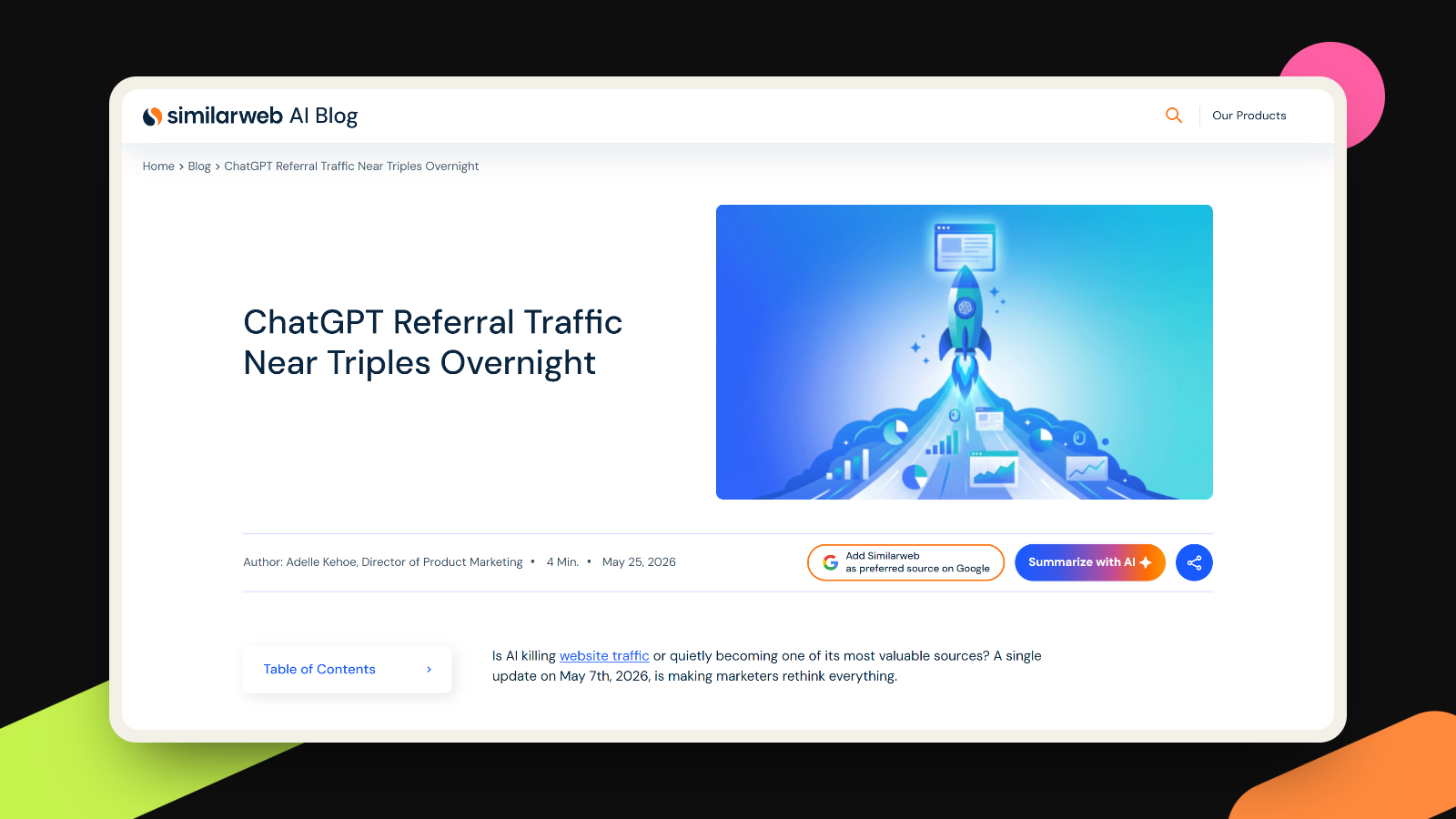
On May 7, ChatGPT started showing brand names in its answers as clickable links. Similarweb, which measures traffic across the web, published what happened next, based on its desktop panel data. In the week after the change, total visits from ChatGPT to websites rose 157.7%, and visits landing on homepages rose 354.7%. Before May 7, about 26 to 32% of the visits ChatGPT sent landed on a homepage. Afterwards the share rose to around 60% and stayed there.
In October the links got a lot more common. Search Engine Journal reported on October 15 that Peec AI, a company that tracks how brands show up in AI answers, ran the same 1 million prompts through ChatGPT twice, from October 2 to 7 and from October 9 to 13. In the second run, ChatGPT put a direct link to a website in 42% of its answers, up from about 8 to 10%, and 54% of those links pointed at a homepage. Peec has shared only these headline numbers, not a full report, so I treat them as a strong signal and lean on Similarweb’s published data for the homepage point.
There was also a short tracking scare. For about a week from October 9, ChatGPT links stopped carrying their utm_source=chatgpt.com tag, so many of those visits showed up in Google Analytics as direct traffic. On October 15, Search Engine Roundtable reported that it was a bug and the tags were coming back. Both Similarweb and Peec sell tools for measuring this kind of traffic, which is worth keeping in mind.
What it means for you
For a long time, getting mentioned by ChatGPT felt nice and paid very little. It recommended you, the person read the answer, and most of them didn’t go any further. A visible link changes that, and a link to the homepage changes what that visitor needs from you.
Picture the person who arrives. They asked ChatGPT for a bookkeeper who works with small agencies, read a few lines about you written by a machine, and tapped your name. They didn’t search for you, so they don’t know you yet. They only know what ChatGPT told them, and your homepage gets a few seconds to confirm it: yes, this is the bookkeeper for small agencies, here is proof, and here is what to do next.
Plenty of homepages aren’t built for that job. They open with a slogan like “Solutions that move you forward”, a slider and a menu with nine items. That’s fine for someone who already knows the brand. For a stranger sent by a recommendation, it looks like the wrong door, and I’d be a little nervous about that, honestly, because the hard part already happened. ChatGPT picked you and the person clicked. Losing them on the first screen would be a painful way to waste it.
The tracking hiccup carries a smaller lesson. If your analytics showed an odd jump in direct visits to your homepage in mid-October, some of it may have come from ChatGPT. AI traffic is still messy to measure, so I’d watch the trend over a few months and not panic over a single week.
What to do this week
- Ask ChatGPT the question your best customer would ask, something like “who’s a good accountant for small creative agencies?” See whether you show up, what it says about you and where your link goes.
- Open your homepage on your phone and compare its first screen with that description. If ChatGPT calls you a branding studio for software founders and your headline says “We create experiences”, rewrite the headline so a stranger knows what you do and who it’s for.
- Put proof on that first screen: a client name, a result or a short review. Someone who came from a recommendation wants to check it quickly.
- Give the homepage one clear next step, like booking a call or seeing prices, and make sure it works with a thumb.
- In Google Analytics, add a note on October 9 to 15 so nobody reads that week’s jump in direct traffic as a mystery later. After that, check the chatgpt.com row in your traffic sources once a month.
ChatGPT can bring someone to your front door, and the homepage has to do the rest. Making that first screen clear enough to keep the visit is the kind of website work we do.
More takes
All takes