Takes No. 009
Instagram’s head is worried about AI copies of creators’ work. Here’s how to protect yours
Adam Mosseri admits Instagram's copyright tools don't cover most creators. Until that changes, keeping your work provably yours is mostly up to you.
What happened
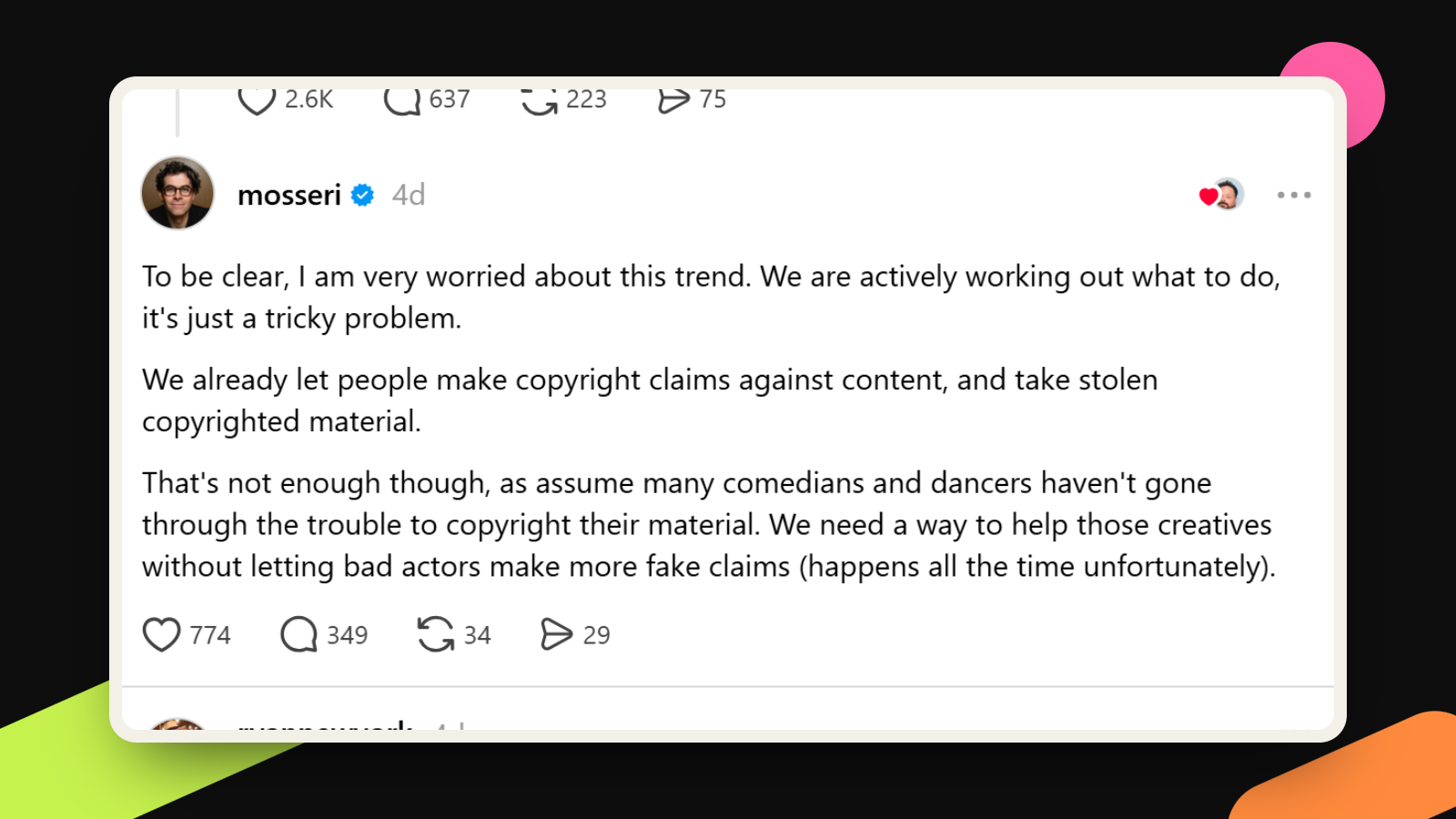
Last week an artist complained on Threads that Instagram was letting AI accounts post work that copied his own. Adam Mosseri, who runs Instagram, answered in two places. In a Threads post he wrote that he is “very worried about this trend” and that Instagram is still working out what to do about it. He pointed out that people can already file copyright claims, then said that isn’t enough, because many comedians and dancers have never registered their material. He also admitted that fake claims happen all the time, which makes any fix harder.
In his weekly Q&A, which ran as a temporary Story, he said Instagram does not cut the reach of AI content just because it is AI, and that it wants people to know when something was made with AI. Social Media Today, which reported both on October 19, says Instagram plans more AI labels and will encourage creators to tag AI content themselves. Instagram hasn’t given a date for any of it.
What it means for you
It’s rare for the head of a platform to say in public that his own tools don’t fully protect the people who make things on his app. I appreciated the honesty. It also tells you something practical: for now, keeping your work from being copied is mostly your job.
That matters more for founders than it might seem. Many founders build a reputation on a recognizable format: a weekly breakdown with the same layout, a drawing style, a way of explaining an idea in three frames. Those are exactly the things an AI account can imitate in an afternoon, and Mosseri’s point about unregistered material applies to most of us. In the US, the Copyright Office explains that your work is protected from the moment you create it, but you have to register a US work before you can sue over it. Most founders posting a carousel on a Tuesday have registered nothing.
The fair reading, I think, is that a platform can’t easily tell who made something first, and fake claims muddy it further. So the creators who come out of this best will be the ones whose originals are easy to prove and easy to find. We wrote last week about Threads and YouTube rewarding original posts with more reach. This is the defensive half of that story: the work you make from scratch needs a paper trail as well as an audience.
What to do this week
- Publish your best ideas on your own website first, with a visible date, then share them on Instagram and LinkedIn. A dated page on a domain you own is simple evidence that you got there first.
- Keep your raw files: the layered design file, the original video, the early drafts. A copy can imitate the finished post, but it can’t produce the working files behind it.
- Tie your format to things that are hard to fake, like your face, your voice and real examples from your own company. A layout takes minutes to imitate, while a story about your third customer only exists because you lived it.
- If a piece is central to your business, such as a framework you teach or an illustration series, ask a lawyer whether registering it is worth the fee. It costs far less than rebuilding a format someone else took.
- When you find a copy, report it through Instagram’s copyright form in the Help Center and keep a dated screenshot. Links to your original and to the copy make the reviewer’s job easier.
A website that holds your original work, dated and in one place, is the backbone of a strong personal brand, and it’s the kind of site we build.
More takes
All takes