Most About pages sound like they were written by the same tired committee: a passionate team, quality service, customers who come first. So I went looking for small businesses whose About pages read like a real person runs the place. I read the About pages of about 20 of them, and six stood out: a landscaping company, a bean company, a bakery, a woodworking publisher, a design studio and a one-person consultancy.
These pages matter more than their spot in the footer suggests. In DreamHost’s 2026 Local Business Trust Index, a survey of 1,201 Americans run in November 2025, 58% said they often or always check a business’s website to confirm what they saw on social media, Google Business Profiles or AI tools. When someone checks who you are, the About page is usually where they land.
For each business below you’ll find a screenshot I took at phone size, what the page does line by line, and the move you can borrow. After that comes a step-by-step method for writing your own, a checklist, and a free fill-in template: download the About page template (.md).
1. Lynch, a landscaping company in Massachusetts: open with your name
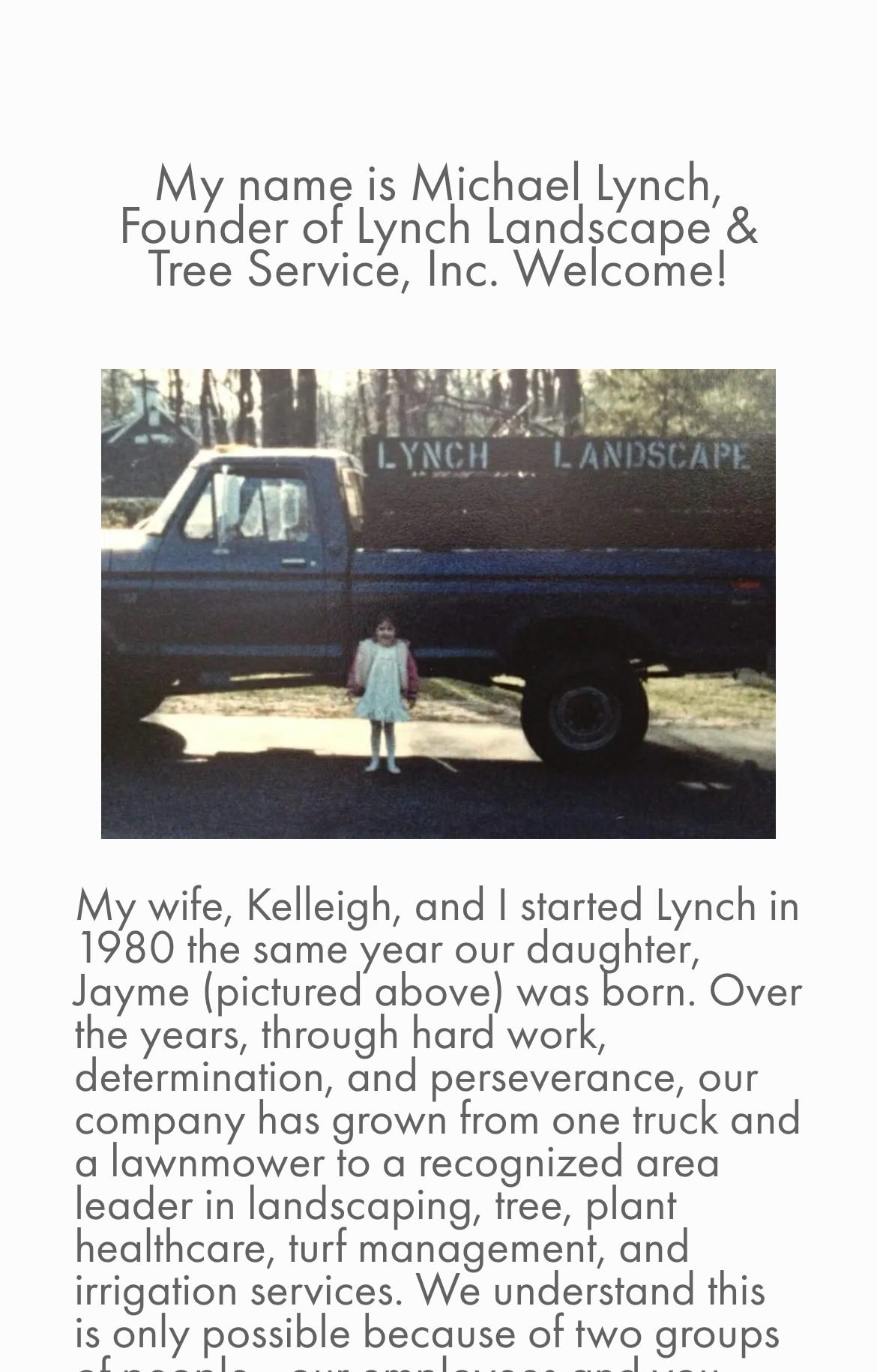
Lynch does landscaping, tree care and irrigation in towns west of Boston, such as Sudbury, Wayland and Concord. Its story page skips the company slogan and opens with a person: “My name is Michael Lynch,” then the founder’s full title and a “Welcome!” Under that sits an old photo of a pickup with the company name painted on its side and a small girl standing next to it.
The letter explains the photo. Michael and his wife, Kelleigh, started the business in 1980, the year their daughter Jayme was born. It grew from “one truck and a lawnmower” into crews that include certified arborists. Further down, in one plain sentence, Michael writes that Kelleigh died in 2019 and that he stays in the daily work to honor her. Then comes the line I’d frame and hang in the office: “You will most likely find me working in the field with our crews.”
For a home service business, that sentence does more than any list of values. Someone is about to let a crew into their yard, and the page tells them who’s in charge, what he looks like and where he’ll be. A long list of local schools, sports teams and charities the company supports shows the same thing from a different side: this business lives in the towns it serves.
Not every paragraph is this good. The one that says employees are “the most important factor” could sit on any company’s site. That contrast is useful, because it shows what makes the rest work: names, years, a photo and a promise a customer could check.
Borrow this: start with your own name and one real photo from the early days, and tell customers where you’ll be when they hire you.
2. Rancho Gordo, a bean company in Napa: start at the moment it began
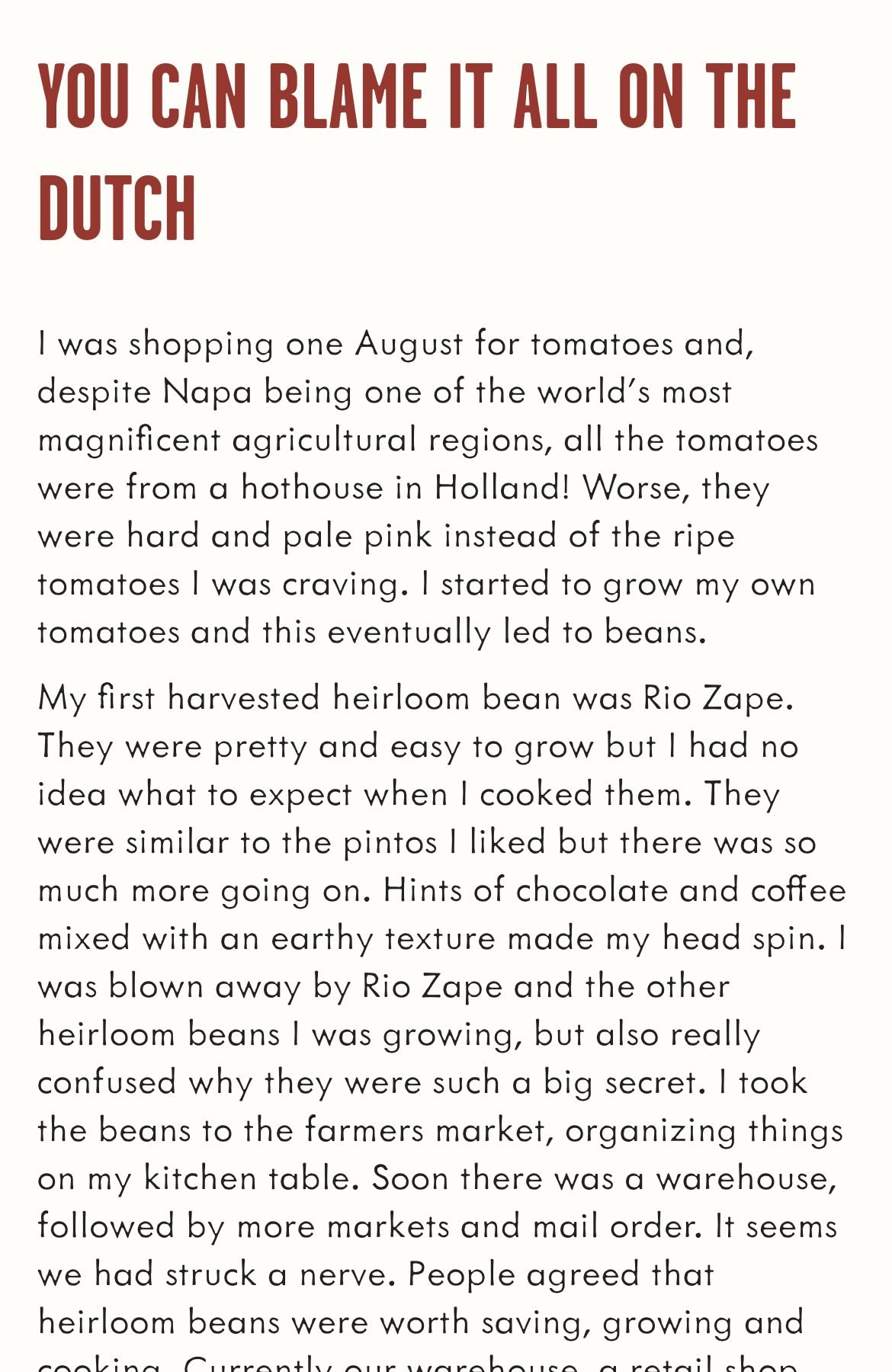
Rancho Gordo sells heirloom beans, grains and chiles from a warehouse and shop in Napa, California. The founder, Steve Sando, writes the page in his own voice, and the first heading tells you it’ll be fun: “You can blame it all on the Dutch.”
The story starts on an ordinary shopping trip one August. Napa is famous farmland, yet the tomatoes in the store came from a hothouse in Holland, hard and pale pink. So he grew his own tomatoes, which led to beans, which led to his first harvested heirloom bean, Rio Zape. He describes its taste (“hints of chocolate and coffee”), takes the beans to a farmers market, and one sentence later there’s a warehouse, then mail order.
I love how fast that goes. The page spends its words on the moment that started everything, then jumps to where the business is today. Plenty of the origin stories I read did the opposite and buried the good part under years of background.
The rest keeps the same voice: where the beans are grown (California, Oregon, Washington, New Mexico, and small farms in Mexico), the cookbooks he’s written, and a section called “Your pals in the bean business” that tells you how to get help. It closes with his name and title, like a letter.
One part shows its age. The press section lists coverage from years ago, including a Saveur list from January 2008. Old praise is still true, but the newest proof belongs at the top, or a reader starts to wonder what happened since.
Borrow this: find the small, specific annoyance that started your business and open with it. A real month and a real object, here a pale tomato, will carry more weight than a mission statement.
3. Proof Bread, a bakery in Mesa, Arizona: tell the hard part
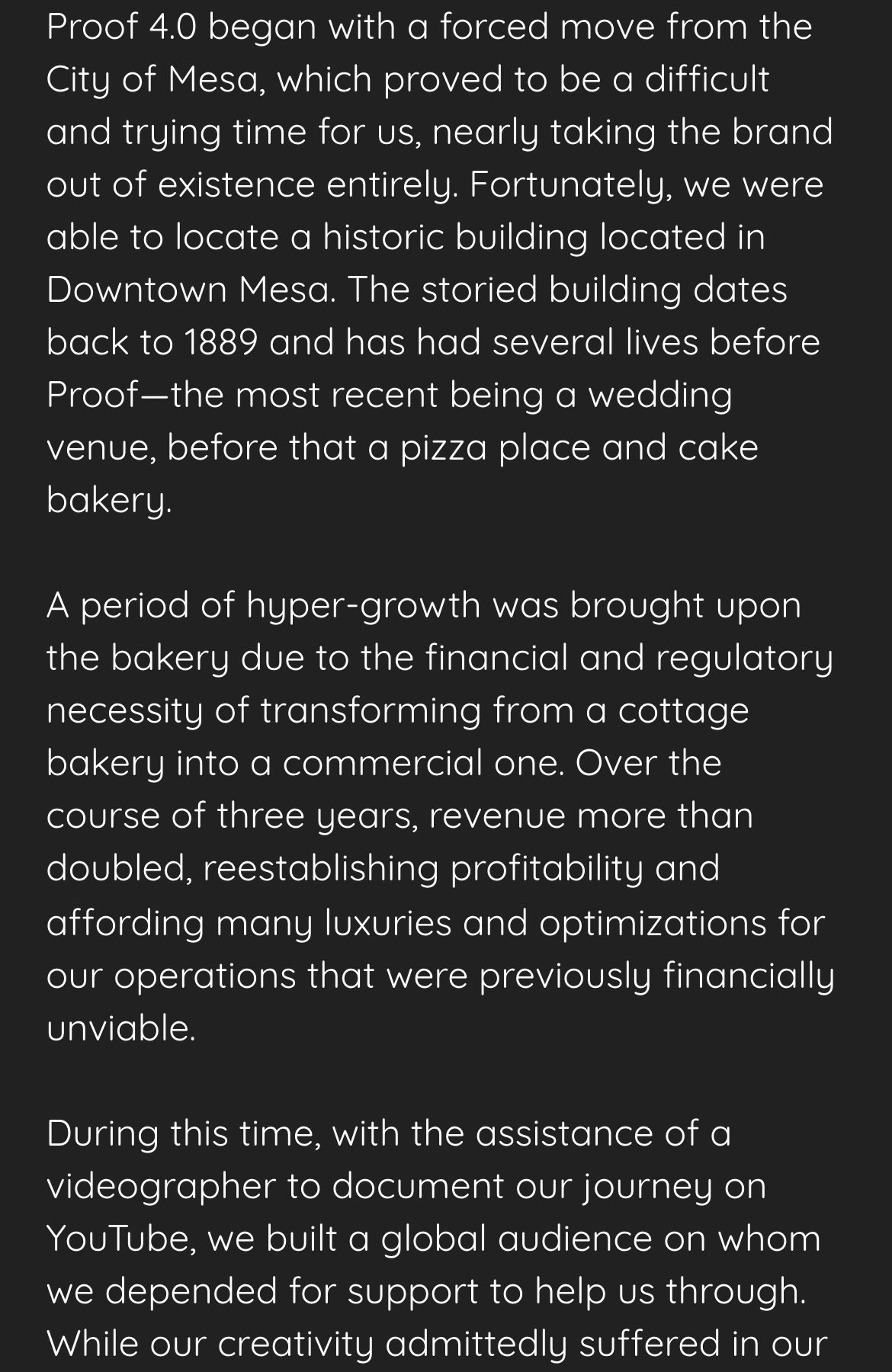
Proof bakes sourdough bread and pastries for its own storefronts and for farmers markets. Its story page reads like the history of a piece of software, and the headings even use version numbers: Proof 2.0, 3.0 and 4.0.
The current owners, Jon and Amanda, started as customers. At a farmers market in 2017, they learned that the founder, Jared Allen, was moving across the country and the bakery was for sale. Within five days Jon was in the founder’s garage learning to bake, and two weeks later the bakery moved into the garage of their own house in Mesa.
What makes the page worth studying is how honestly it covers the bad years. They admit restaurants were difficult wholesale customers. Then, after the bakery had finally become profitable, a letter from the City of Mesa forced a move that nearly took the brand “out of existence entirely.” They found a downtown building from 1889, turned a cottage bakery into a commercial one, and over three years revenue “more than doubled.”
That setback is the strongest part of the page. A story where everything goes right reads like an ad. A story with a forced move and a near miss reads like a business that will still be open next Saturday. The page is long, but on a phone the years and version numbers work as signposts, so you can skip to the part you care about.
Borrow this: include one real setback and what you did next. Keep it to the facts. The city’s letter and a new address are dramatic enough without help.
4. Lost Art Press, a woodworking publisher in Kentucky: put the useful part first
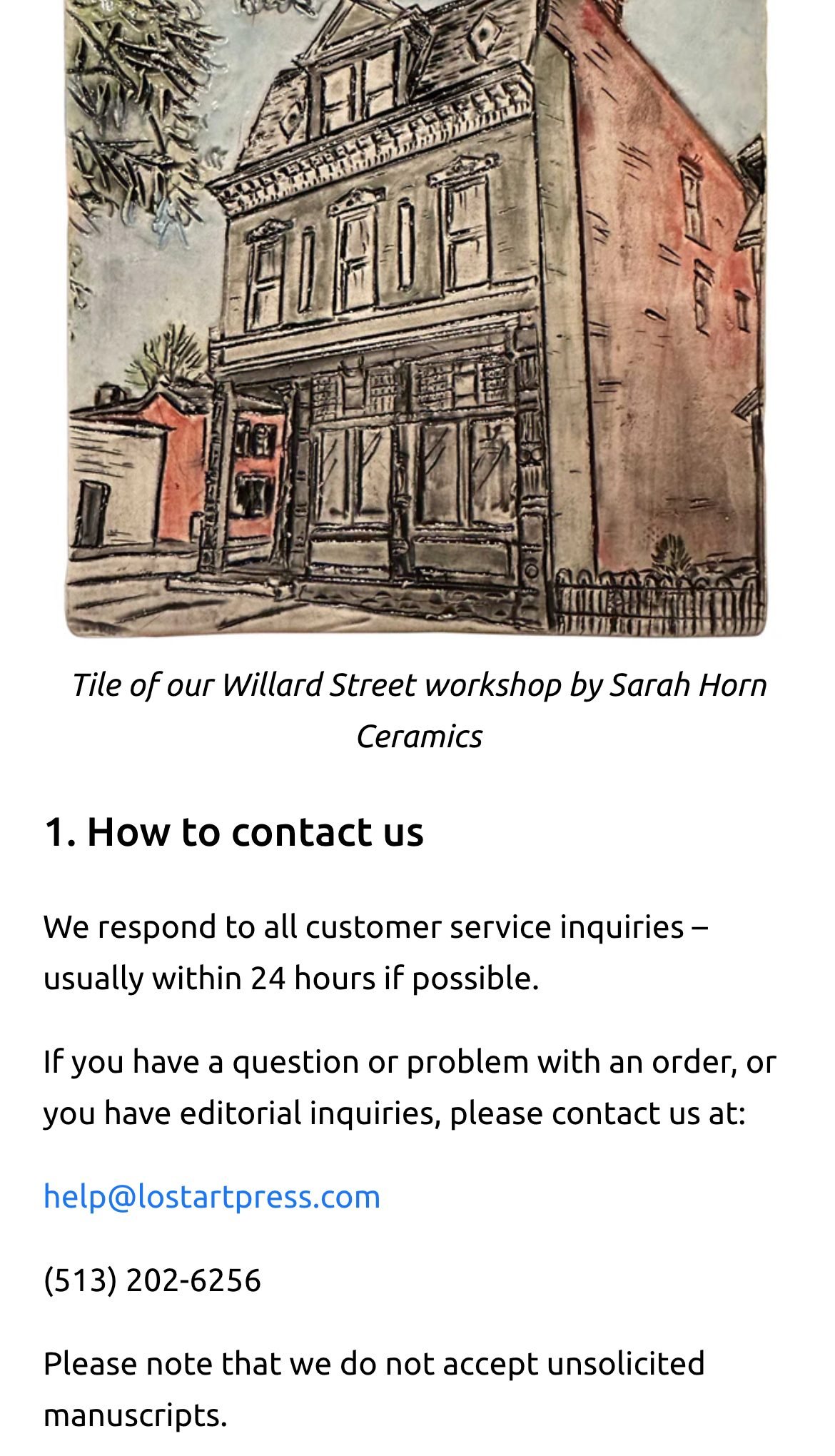
Lost Art Press publishes woodworking books and sells a few tools from northern Kentucky. Its page is titled “About Us, Contact Us & Returns,” and the order is deliberate. Section one is how to reach them: an email address, a phone number and replies usually within 24 hours. Section two is how to send something back. The company story only starts in section three.
On most sites I’d call that a strange order. Here it makes sense, because many people who open the About page of an online shop are checking that a real company with a phone number stands behind it. In the same DreamHost survey, 67% named clear contact information (phone number, email, address) as the element on a website that builds the most trust.
When the story arrives, it turns every belief into something you can check. The press pays royalties “two or three times higher than the industry average.” Its books are made “to last at least a century,” with sewn bindings and thick hardbacks. It returns about half of its profits to authors, accepts no sponsorships and doesn’t sell on Amazon. The co-founder writing the page explains that he and his partner each put in $2,000 to print their first book, names all six employees, and says they ship about 60,000 books a year, “a tiny publisher in the grand scheme of things.”
Each of those values costs the company something, and that’s why I believe them. “We care about quality” costs nothing to type. Sewn bindings cost money every time a book goes to the printer.
Borrow this: put your contact details where a doubtful visitor sees them first, and turn each value into a rule you follow, with a number if you have one.
5. Mule Design, a studio in San Francisco: list your refusals
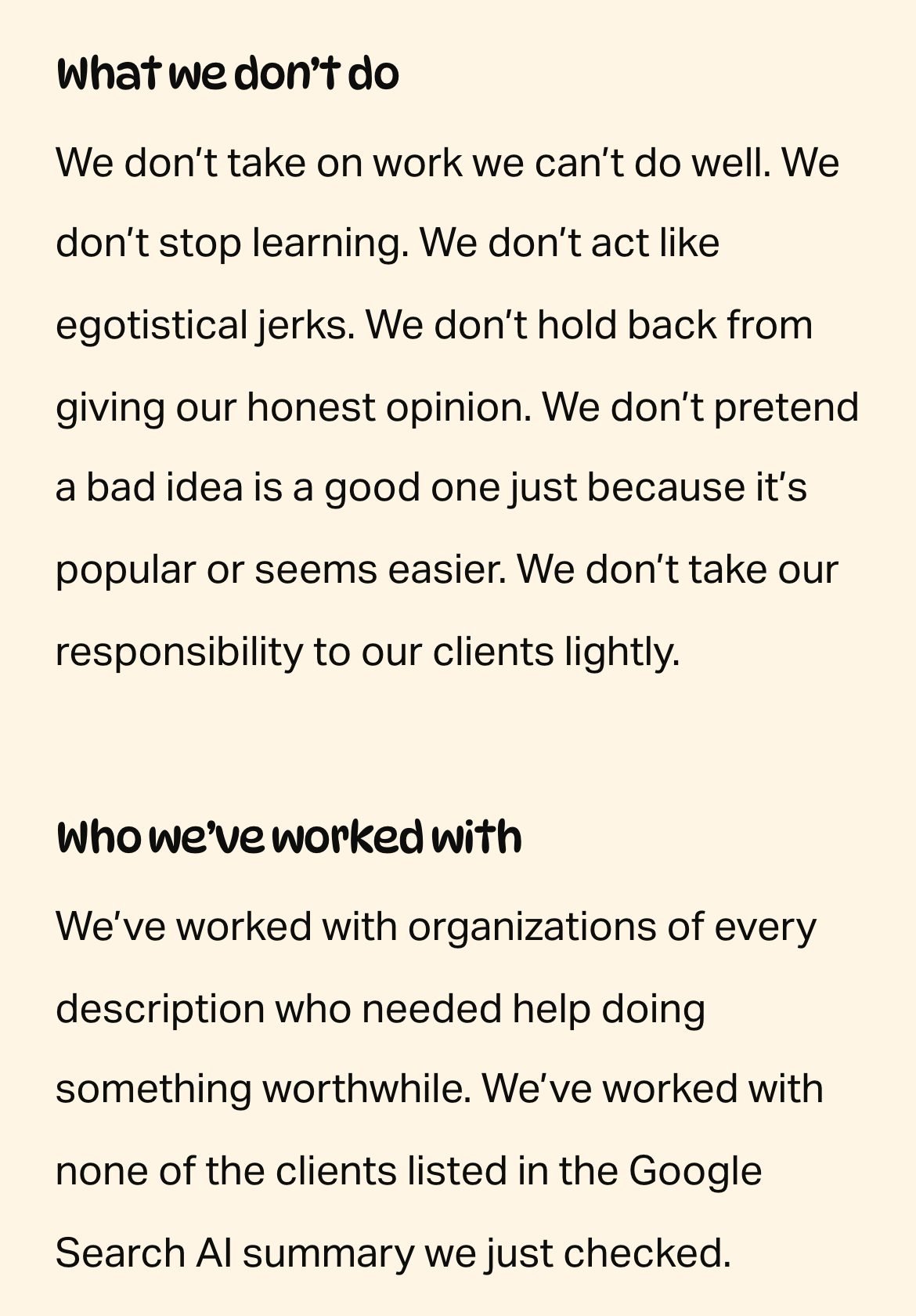
Mule Design is a design and research studio run by Erika Hall and Mike Monteiro, who have written several books about design work between them. Their About page opens with a headline about the reader: “We’re more interested in talking about you.” The next line, “This isn’t a line,” made me laugh, because that was exactly what I’d been about to think.
Two sections on this page didn’t appear on any other About page I read. “What we don’t do” lists six refusals, from taking on work they can’t do well to pretending a bad idea is good because it’s popular. Then “Who we’ve worked with” skips the usual wall of client logos and says they’ve worked with “none of the clients listed in the Google Search AI summary” they had just checked.
That joke carries a real warning. AI tools now answer questions about small businesses, and those answers can be wrong, which is why the 58% who double-check on a business’s own website matter so much. On your own site, you control the facts, so state plainly what’s true.
The testimonial section has one more quiet trick. Under a quote from a former client, they add that it’s been a few years and he has a different job now, but it’s still their favorite. Admitting the quote is old makes it easier to believe.
Borrow this: write a short list of work you turn down. Saying who you’re not for helps the right clients recognize themselves, and it reads like you’ve done the job long enough to know.
6. April Dunford, a positioning consultant in Toronto: numbers instead of adjectives
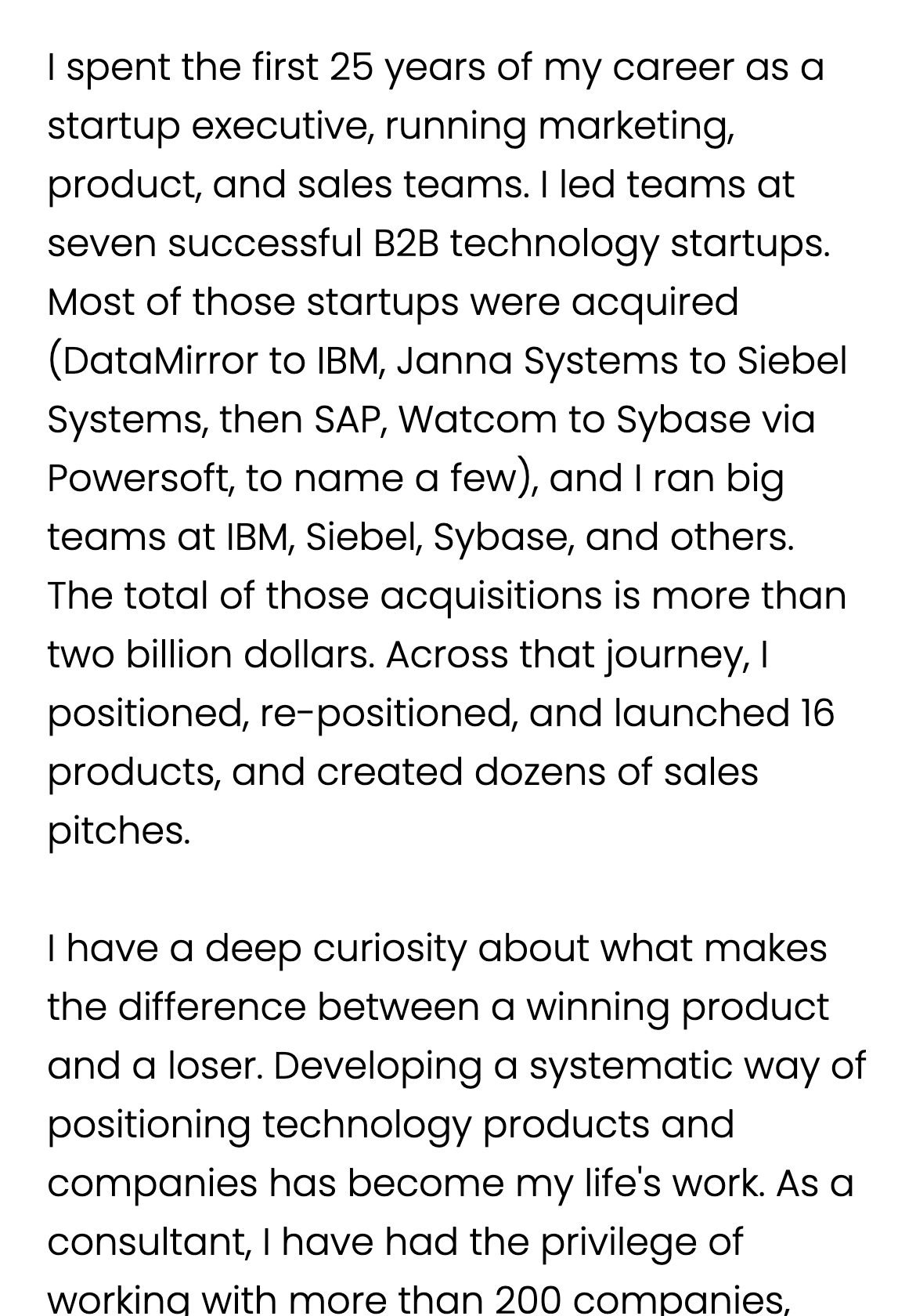
April Dunford works alone, helping technology companies with positioning and sales pitches. When you’re the whole company, your About page works as your résumé whether you like it or not, and hers reads like it was written by someone who knows what buyers check.
The first paragraph is almost all numbers: 25 years as a startup executive, teams led at seven B2B technology startups, acquisitions she puts at more than two billion dollars in total, and 16 products positioned or launched. The next one adds more than 200 companies as a consultant. Each number is a claim a buyer could test, which is why it hits harder than “experienced” or “proven” would.
Then the page relaxes. She studied engineering, and adds that her grade 6 English teacher turned out to be wrong about the importance of grammar. Her story ends with Toronto, kids, a small dog and “a cabin in the woods.” Three testimonials follow, each with a full name, a title and a company, and the page ends with a button to book her.
The one line I’d change is the headline, “A globally recognized leader in positioning.” It may well be true, but it’s the only sentence on the page that asks you to take her word for it, and the numbers underneath make the case better.
Borrow this: replace each adjective about yourself with the number behind it, then add one ordinary detail about your life, so readers know a human answers the email.
How to write your About page, step by step
The six pages look nothing alike, but they’re built from the same parts. Here’s the order I’d write them in. Keep the template open as you go; each step has a space in it.
Step 1: Write the facts block
Before any story, write five plain lines: who runs the business (real names), what you do, who it’s for, where you work, and how to reach you. Add the year you started if it helps. This block can sit near the top, as it does for Lost Art Press, or in a clear section at the end. Google’s own guidance on helpful content (last updated October 2026) asks site owners whether visitors can find background about the people behind a site, “such as through links to an author page or a site’s About page.” This block is that background.
Step 2: Find your starting moment
Ask yourself what annoyed you, what your first job or product was, and where you were when you decided to start. Write it in three to five sentences with a month or year, a place and one object you can picture: Rancho Gordo’s pale tomato, Lynch’s first truck. If your start was dull, start with the first customer you remember instead.
Step 3: Swap adjectives for proof
Write down every word you’d use to describe yourself: experienced, reliable, passionate, careful. Next to each one, write the fact that proves it, like years in business, jobs finished, a license, a warranty, a reply time. Keep the fact and cut the adjective. April Dunford’s numbers and Lost Art Press’s sewn bindings both came out of this kind of swap.
Step 4: Add one hard part
Write one short paragraph about something that went wrong and what you changed: a slow first year, a move, a product you got wrong and remade. Proof’s forced move shows how much trust one honest setback earns. One is enough; this is an About page, not a memoir.
Step 5: Say what you won’t do
List two to five things you refuse to do, and pick ones that cost you something. Refusing to sell on Amazon, as Lost Art Press does, or turning down jobs you can’t staff with your own crew tells a buyer far more than a line about integrity. Mule’s list works because each refusal sounds like it came from a real job that went badly.
Step 6: Add real photos and sign it
Use photos of the actual people, place and work, ideally including one from your first year. In the DreamHost survey, 47% said they want to see real photos of the team or business location, not stock images or generic graphics. Don’t fake this with AI portraits: Google’s same guidance names AI-generated headshots and made-up names as a form of deception. Then sign the page with your name, as Lynch and Rancho Gordo do.
Step 7: End with the next step
Close with one clear action that fits your business: call, book a visit, come to the shop, order. Mule ends with its street address and an email for new clients, April Dunford with a booking button, and Rancho Gordo with its product range. A reader who reached the bottom of your About page is interested, so give them somewhere to go.
If you use AI, let it interview you
Many people draft this page with an AI tool now, and that’s fine as long as the facts and the voice stay yours. People notice when they don’t: in an April 2026 report from Meltwater and YouGov, based on nearly 10,000 consumers in seven markets, 32% said they would trust brands less if content is AI-generated, and 15% said they’d trust them more. So ask the AI to interview you before it writes a word:
I run [business] in [town]. Interview me so you can write my About page. Ask one question at a time, no more than 12 in total, about: the moment the business started (month, place, what happened), what I do and for whom, the numbers behind my experience, one hard time and what I did, what I refuse to do, and how customers reach me. Don’t write anything until I’ve answered. Then write an About page of 300 to 500 words using only facts I gave you, in the words I used. Put [CHECK] after any sentence where you had to guess. Don’t use the words passionate, dedicated, quality, solutions or journey.
Read the draft out loud. Anything you wouldn’t say to a customer across the counter, rewrite in the words you would use. Then look up every [CHECK] mark before you publish.
A checklist before you publish
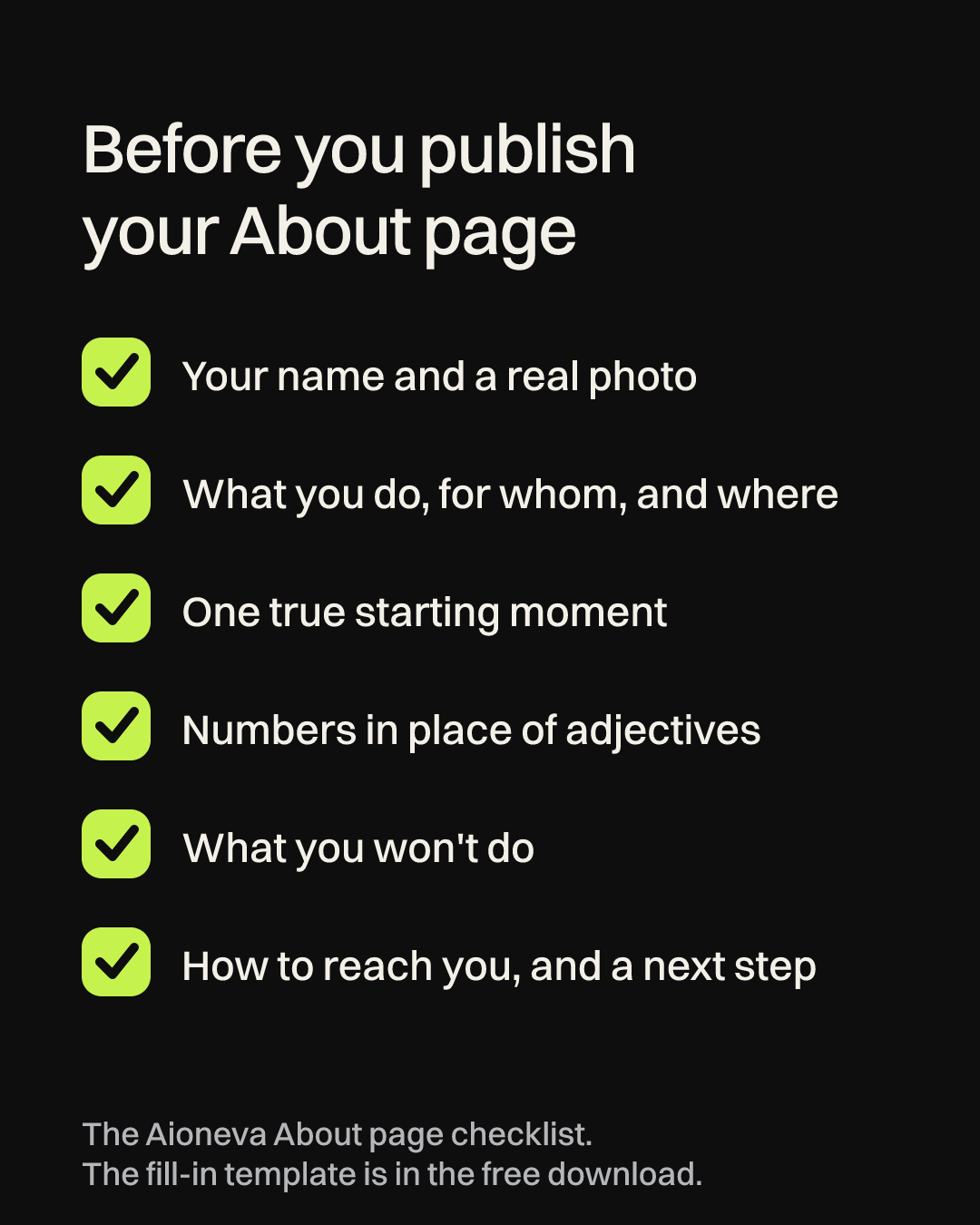
The template has every step above as a fill-in section, the interview prompt and this checklist. Fill it in yourself, or upload it to Claude, ChatGPT or Gemini and let it run the interview.
Your About page usually sits next to a short bio, and the two should tell the same story. Our founder bio examples show how to write that bio for your website, LinkedIn and press, and the five jobs of a service page covers the pages a reader visits next. If you’d rather have your website and its words written for you, that’s part of what we do at Aioneva.